Write down four things every day: milk from each animal, what the herd ate, anything unusual about an animal, and money that came in or went out. That makes a dairy easier to check each morning. A clear record starts at the animal, not at the collection centre.
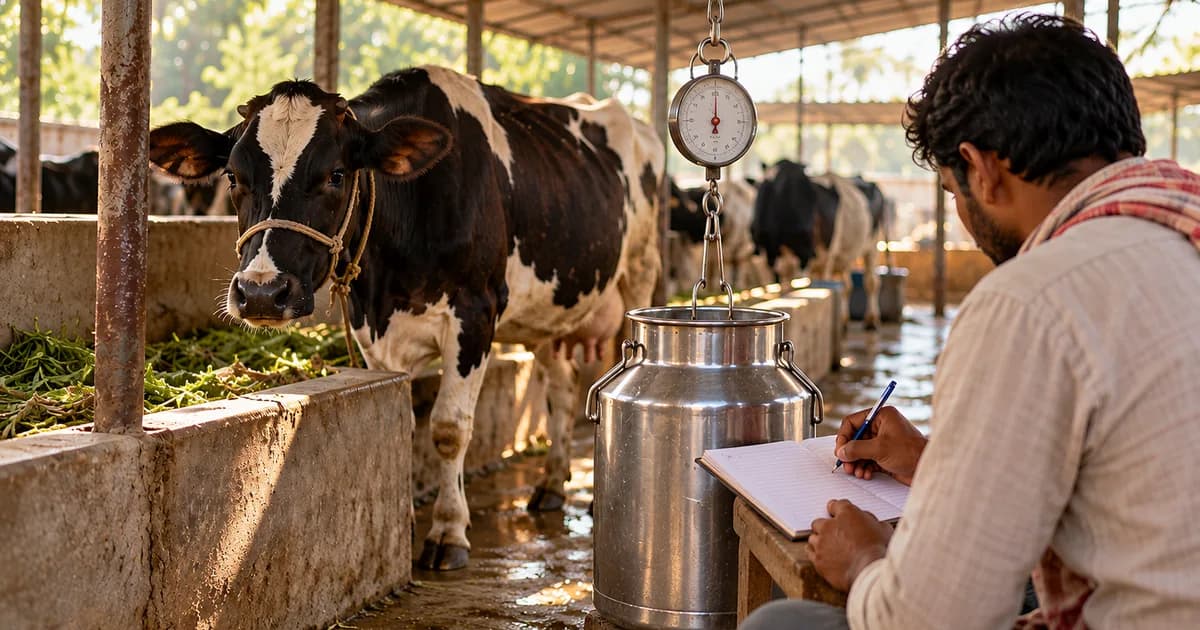
- Record morning and evening milk separately for each cow or buffalo.
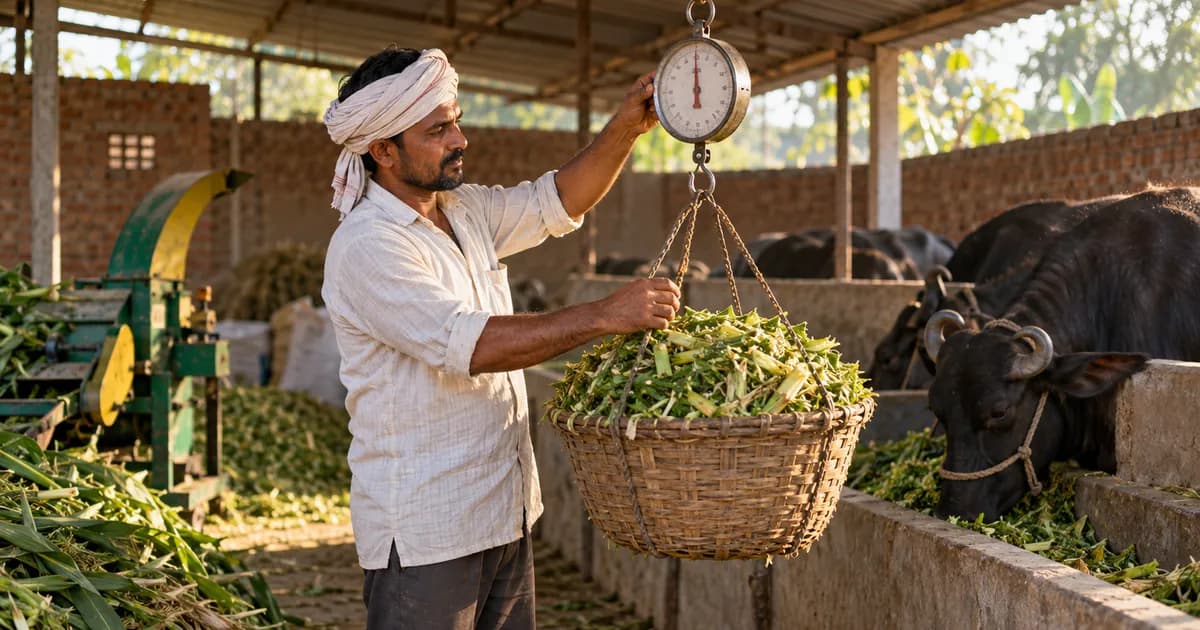
- Write feed in kg and keep the purchase bill with the entry.
- Mark an animal that ate less, looked dull, came in heat or was treated.
- Match your total milk and rate to the dairy slip when it arrives.
Why do digital milk records matter?
The collection centre only sees the milk you deliver. It cannot tell you that Gauri gave less this morning, that the silage changed yesterday, or that one buffalo is off feed. A daily record connects the milk at the collection centre to the work that happened in your shed.
Your own notebook or phone record fills that gap. When milk falls, you can look back at feed, heat, calving and treatment instead of relying on memory. The useful habit is not writing a long report. It is writing the same few items every day.
What should you record for each animal?
Start with the animal name or tag and her morning and evening milk. Do not mix the whole herd's milk into one number if you want to find a problem early. A cow can be below her usual yield while the herd total still looks normal.
| Record | Write this | Why it helps |
|---|---|---|
| Milk | Morning kg and evening kg | Shows a fall against that animal's usual milk. |
| Feed | Fodder and concentrate in kg, by animal group | Lets you check changes against milk and feed cost. |
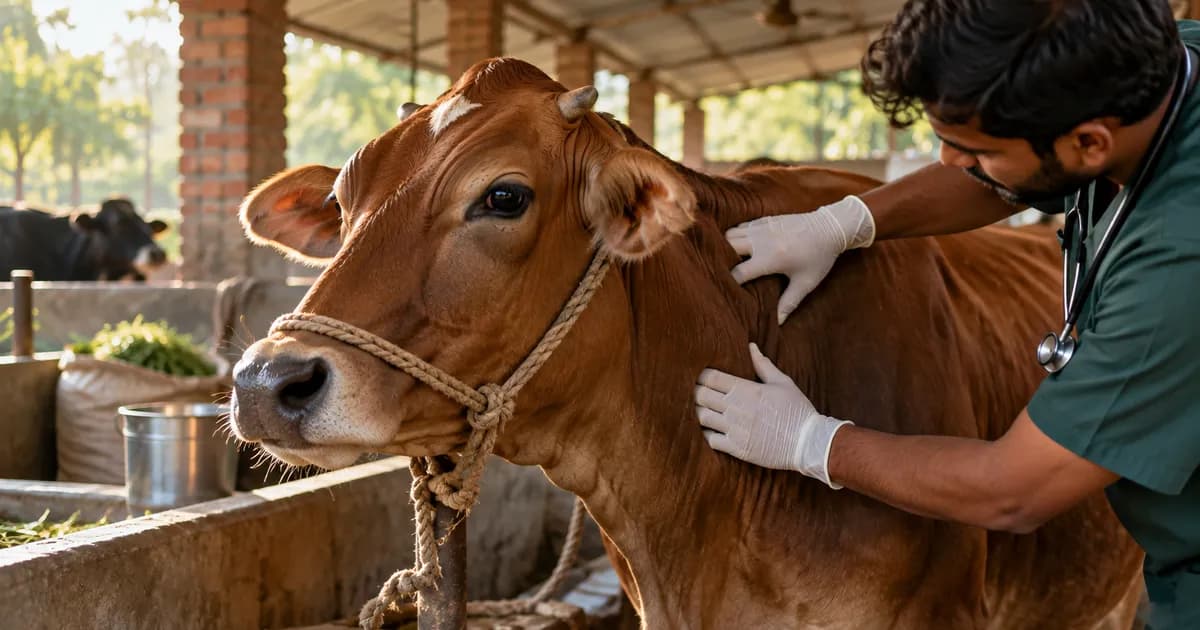
| Health | Off feed, fever, loose dung, injury or treatment | Gives the vet a clear timeline. |
| Breeding | Heat seen, AI date, pregnancy check and calving | Stops important dates living in one person's memory. |
| Money | Feed bill, vet bill, labour, dairy payment | Shows the cost per litre and the real monthly result. |
Write what you saw, not what you think caused it. For example: "Gauri ate half her ration and gave 2 kg less at evening milking." That is more useful than writing "sick." Call your vet if an animal is off feed, has fever, is in pain, has an injured udder or her milk changes suddenly.
How do you spot a milk drop without overreacting?
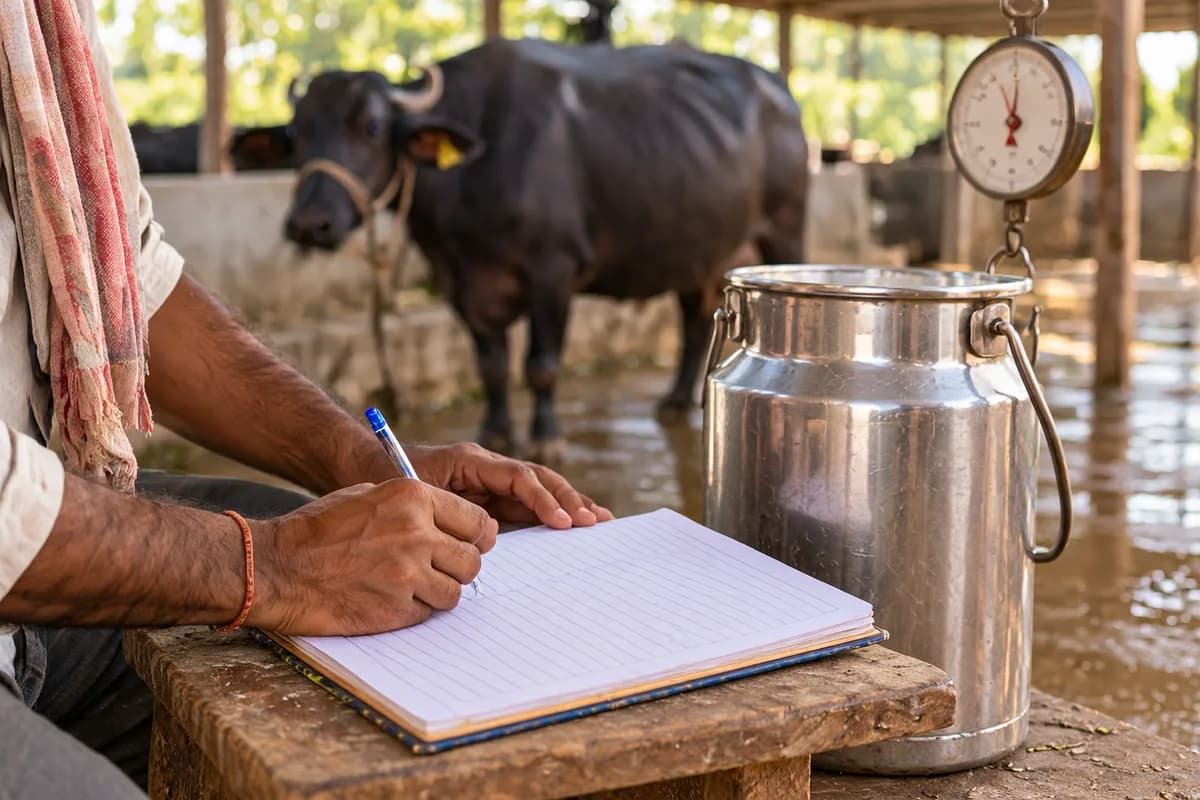
Compare an animal with her own recent pattern, not with the best cow in the shed. One low milking can happen. A drop that continues, especially with less feed intake or a visible health change, deserves a closer look. Check first whether milking time, feed, water or the person recording changed. Then look at the animal and contact your vet when there are health signs.
Keep the milk entry close to the scale. If the person who milks writes the kg immediately, the number is less likely to become a guess at night. NDDB's dairy knowledge resources also treat milk, feeding and reproductive management as connected farm decisions. A record lets you see those connections on your own animals.
How should you record feed and costs?
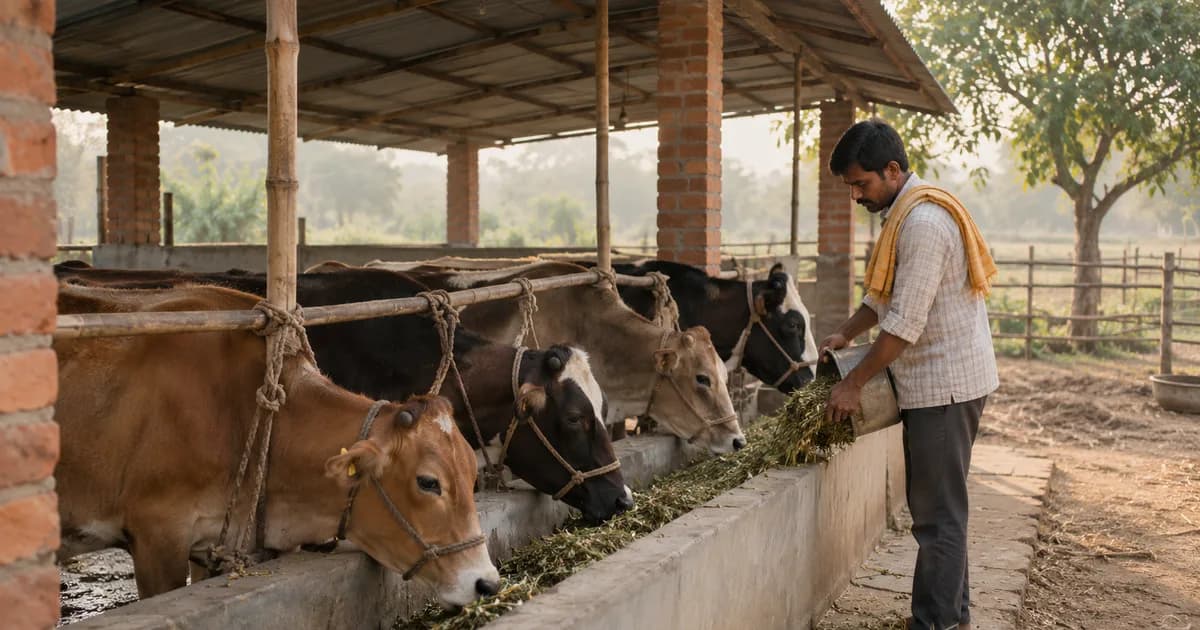
Record feed by group if individual feeding is not practical: milking cows, dry cows, heifers and calves. Write the kg of green fodder, dry fodder and concentrate used that day. When you buy feed, write the bag weight, price and date. Keep the bill or take a photo of it.
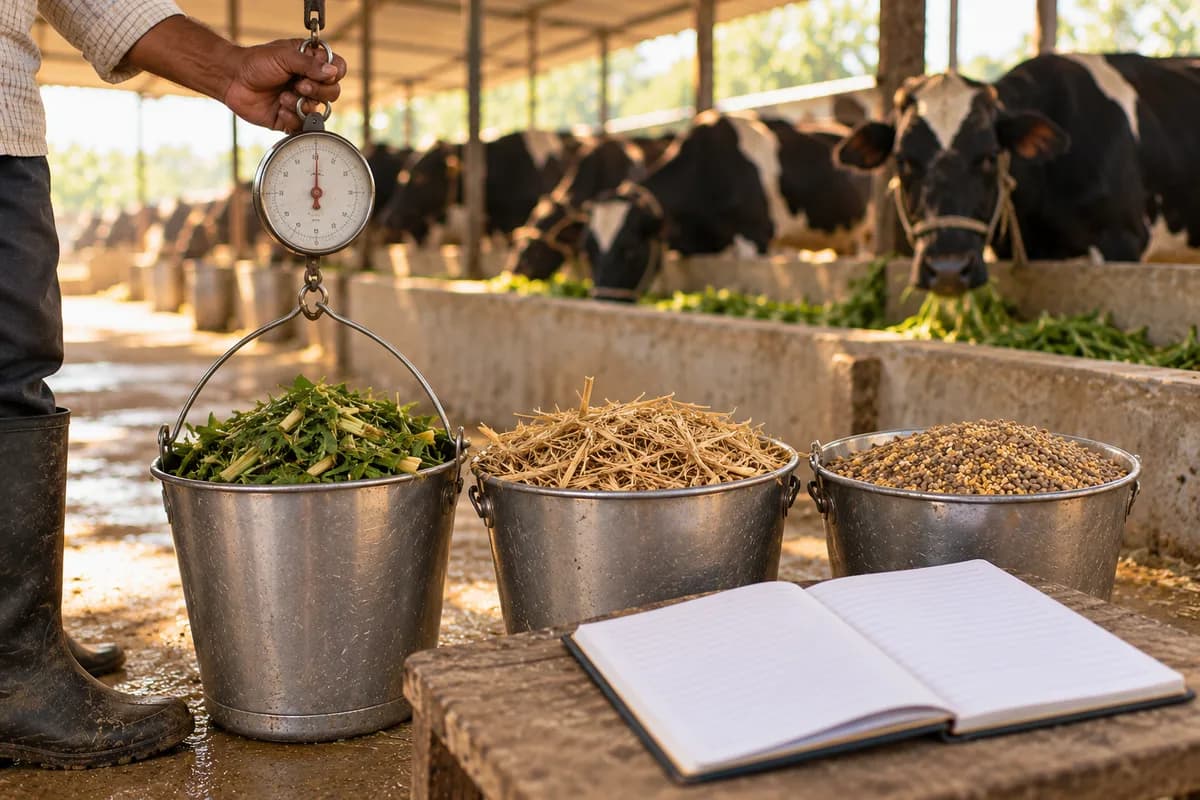
At the end of the month, add all herd costs and divide by the litres milked. That gives you a cost per litre you can compare with the dairy rate. Use the dairy farm profit calculator to make the sum, and the milk fat and SNF calculator to check what the dairy should pay for the milk test result.
Paper notebook or phone: which is better?
A notebook is better than no record. It works when there is no signal and a worker can start today. Its weak point is finding an old entry, adding totals and seeing one animal's pattern. A phone record is useful when it keeps the same simple routine but can show an animal's milk against her own past entries and remind you about due dates.
Choose one place for the final record. Do not keep milk on a wall calendar, health on loose paper and costs in someone's WhatsApp chat. That creates three incomplete stories when you need one answer.
What to do this week
- Make one row for every milking animal, using her name or tag.
- For 7 days, record morning and evening milk immediately after milking.
- Write every feed purchase and the kg fed to each animal group.
- Mark every heat, treatment, health sign and breeding date on the same day.
- At week end, circle one animal whose milk or appetite changed and review the record with your vet or supervisor.
Pashupaalak keeps milk, feed, health and costs together for each animal, even when the shed is offline. Workers can make the entry in Hindi, Marathi or English, and the owner can see milk changes and the month's money in one place. Start with your existing routine on the web app; the useful part is making the entry every day.