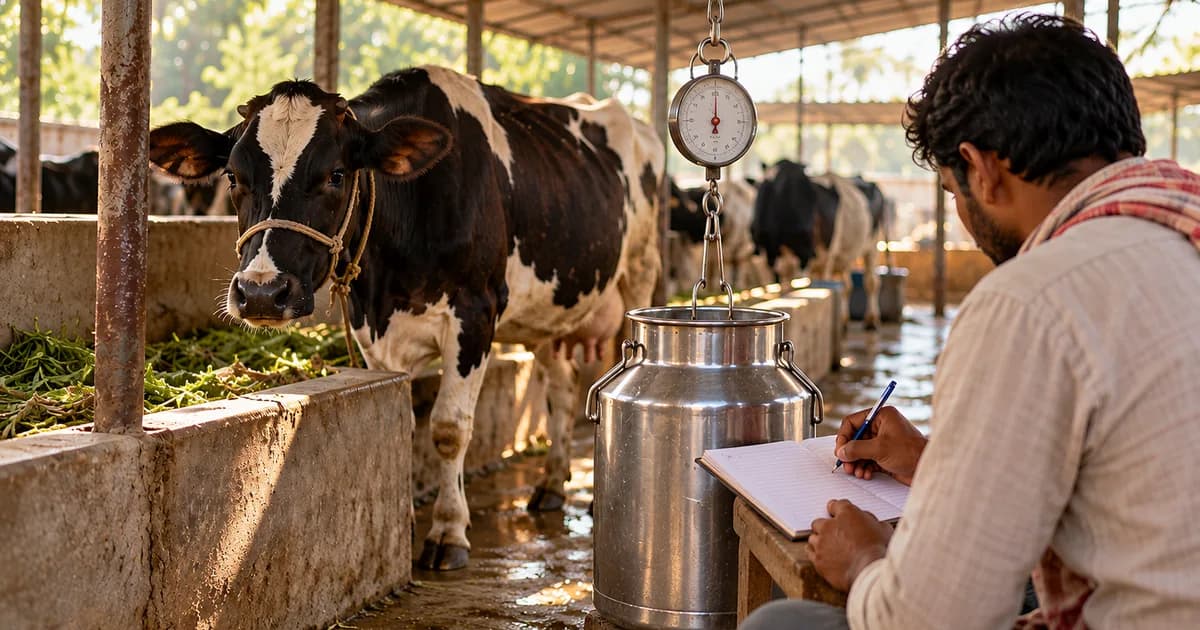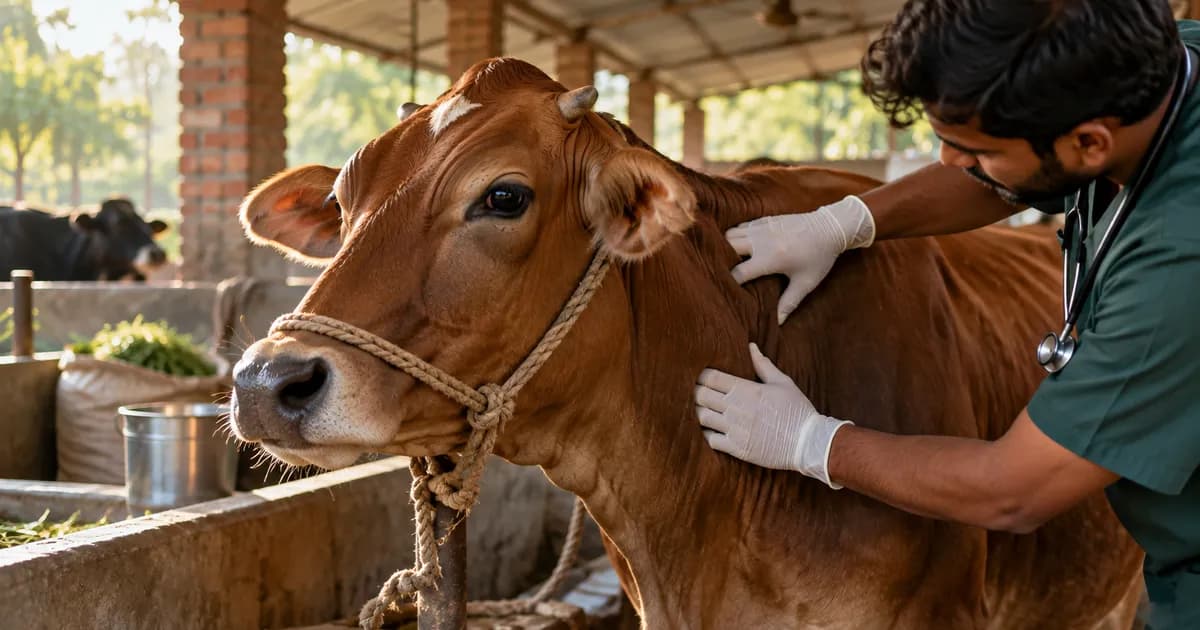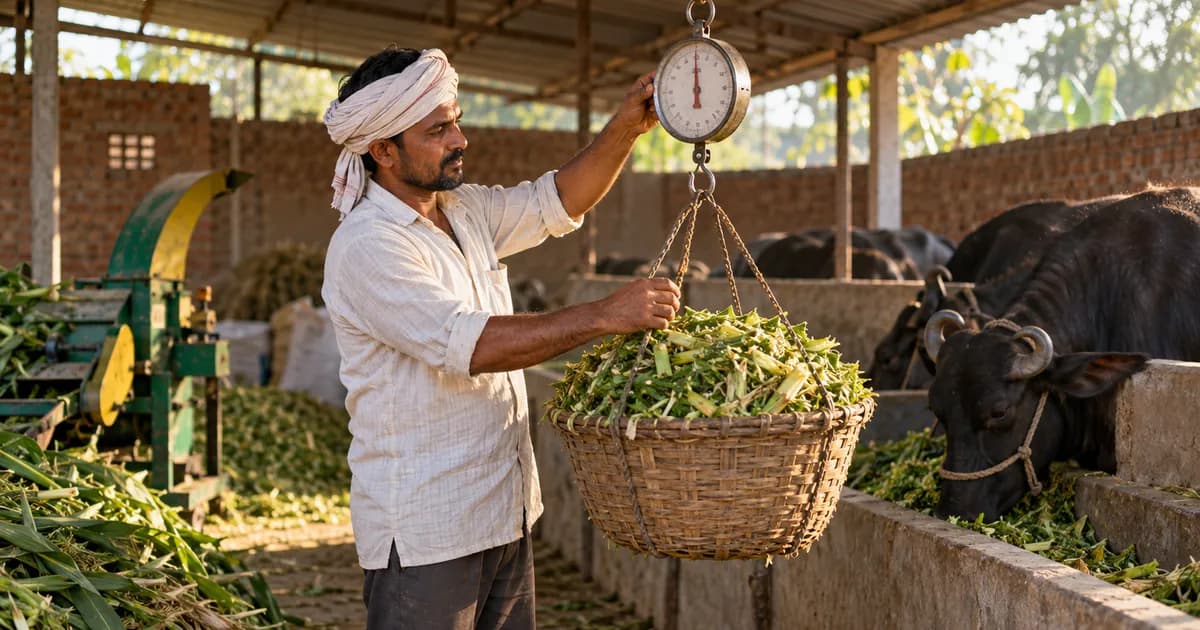
Your cost per litre is everything you spend on the herd in a month, divided by the litres of milk you get in that month. Feed is the line to start with, because you can measure it every day. Once you have the number, you can tell whether the rate your dairy pays leaves you any profit.
- Cost per litre = total monthly cost ÷ total litres milked in the month.
- Count every animal that costs you money, including dry cows, heifers and calves.
- Start with the daily feed cost: kg of each feed × what you pay per kg.
- Compare the result with what the dairy pays for your fat and SNF, not only the headline rate.
The formula and what to count
Add up the month's feed, labour, vet and other bills for the whole herd. Divide by the litres you milked, not only the litres you sold.
Include the animals that are not milking. Dry cows, heifers and calves eat every day, and the milking cows have to pay for them. NDDB's Dairy Knowledge Portal makes the same point about missed heats: each one costs at least 21 days of milk and 21 days of keeping the animal.
Step 1: Work out the daily feed cost
Weigh what each group eats for a few days, then multiply by what you pay per kg. NDDB's portal gives two example rations:
| Per day | HF cow, 500 kg, 20 litres | Murrah buffalo, 550 kg, 8 litres |
|---|---|---|
| Green fodder | 20 kg | 20.5 kg (maize fodder) |
| Dry fodder | 2 kg | 4.5 kg (wheat straw) |
| Cattle feed (BIS type I) | 9 kg | 6.2 kg |
| Mineral mixture | 150 g | 120 g |
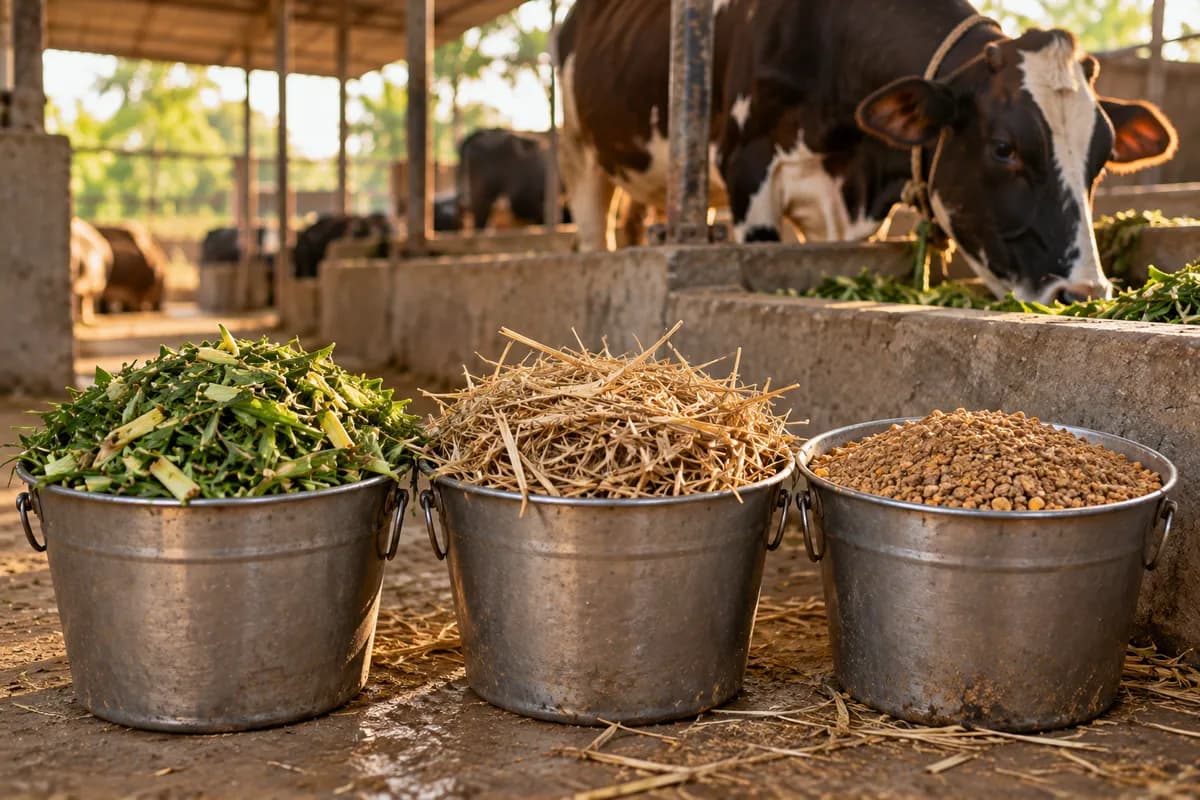
These are examples, not a rule. NDDB says feed needs and costs change with the season and the region. Its staff also note that a cow eats dry matter equal to about 3% to 4% of her body weight, so a 400 kg cow needs 12 to 16 kg of dry matter a day.
Now put your own prices on it. For example, say green fodder is ₹3 a kg, dry fodder ₹10, cattle feed ₹30 and mineral mixture ₹100 a kg. The 20-litre cow's day then costs 60 + 20 + 270 + 15 = ₹365. That is about ₹18 a litre for feed alone. These prices are made up to show the sum; use your own bills.
Step 2: Add the other costs
- Labour: wages for milking and cleaning, plus your own time at a fair rate.
- Vet and medicine: vaccines, deworming, treatment, and AI or bull service.
- Power, water and shed upkeep.
- Transport to the dairy or society.
- Interest and loan instalments on animals and equipment.
Add these for the month, then add the feed bill for every animal. Divide the total by the month's litres. That is your cost per litre.
Step 3: Compare it with what you are paid
Dairies pay for fat and SNF, not only for litres, so a litre of your milk can bring in more or less than the headline rate. Use the milk fat and SNF calculator to see what your milk is worth per litre, and put that next to your cost per litre.
The gap between the two numbers is your profit per litre. Multiply it by the litres in the month, or put your numbers in the dairy farm profit calculator.
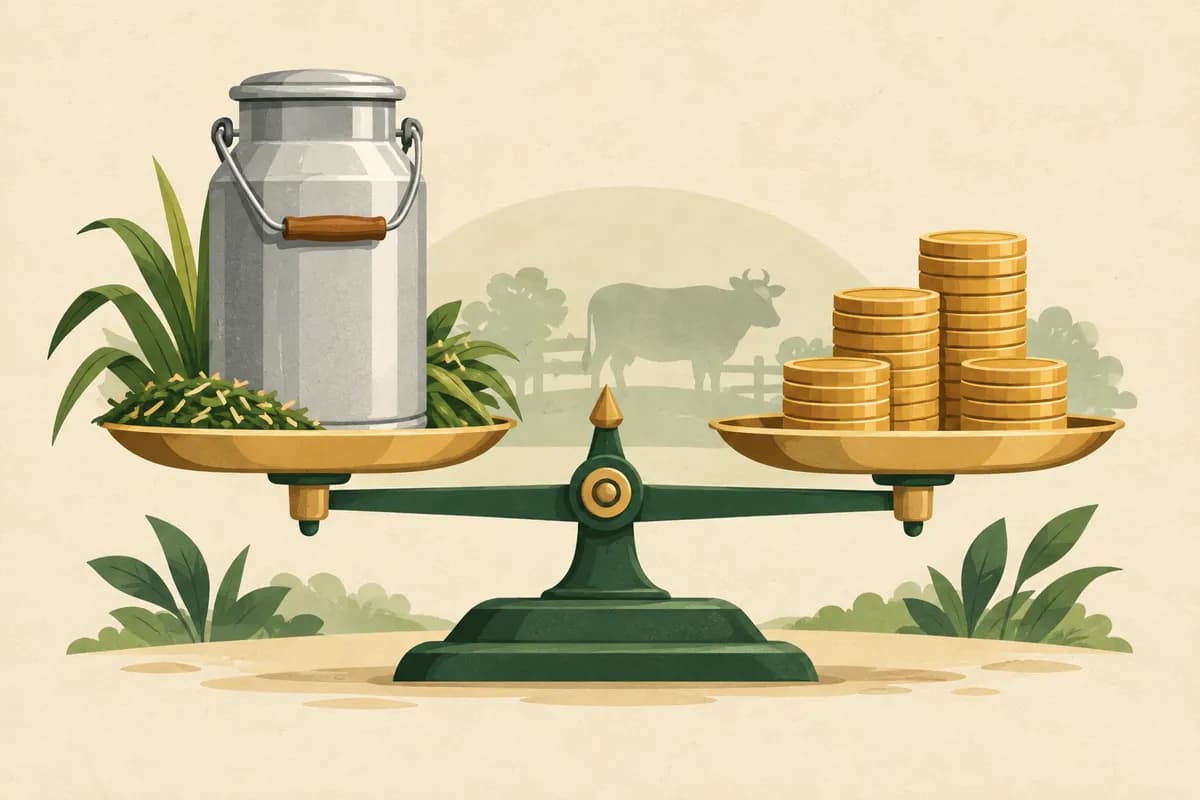
Where the cost per litre can come down
- Feed by yield. NDDB's staff say that for cows on compound cattle feed type II (20% crude protein), about 400 g of feed per litre of milk is enough. They add that the right amount varies from farm to farm with the fodder you grow. Feeding well above what a cow needs only adds to the bill.
- Balance the ration. NDDB's staff point farmers to the Pashu Poshan app to work out a ration from their own feed prices.
- Do not lose heats. Every missed heat costs at least 21 days of milk plus 21 days of feed.
- Look at each cow. One cow on a full ration that gives little milk pushes up the cost per litre for the whole herd.
What to do this week
- Write down the kg of each feed that each animal group gets, every day for 7 days.
- Collect last month's bills: feed, vet, labour and power.
- Add up the litres you milked in the month, not only the litres sold.
- Divide the total cost by the total litres.
- Compare it with your dairy slip for the same month, and note which animals look expensive.
A notebook works for this if you write in it every day. Pashupaalak keeps each animal's milk, feed and costs in one place, estimates milk income from kg × your rate and matches it to the dairy bill when it arrives. That makes the month-end sum a matter of reading the numbers, not collecting them. You can start free on the web app.