Low milk fat almost always comes down to feed: too little fodder, too much concentrate, or a cow that is too thin. NDDB lists five causes of low fat and four causes of low SNF. You can check most of them in your own shed this week, without buying anything.
Why low fat costs real money
Dairies pay for fat, so every drop shows up on the slip. A 2022 review of milk fat depression in Agricultural Reviews says that each 0.10 percentage point fall in milk fat can cut a dairy farmer's income by 1.66%.
For example, if your milk brings in ₹1,20,000 a month and fat slips from 4.0% to 3.8%, that is two steps of 0.10, so about ₹4,000 a month. To see what your own fat and SNF are worth, use the milk fat and SNF calculator.
The five causes of low fat
NDDB gives these causes of low fat in milk:
- Too little fat in the diet. NDDB lists this first.
- Too much concentrate. NDDB calls it excessive concentrate feeding.
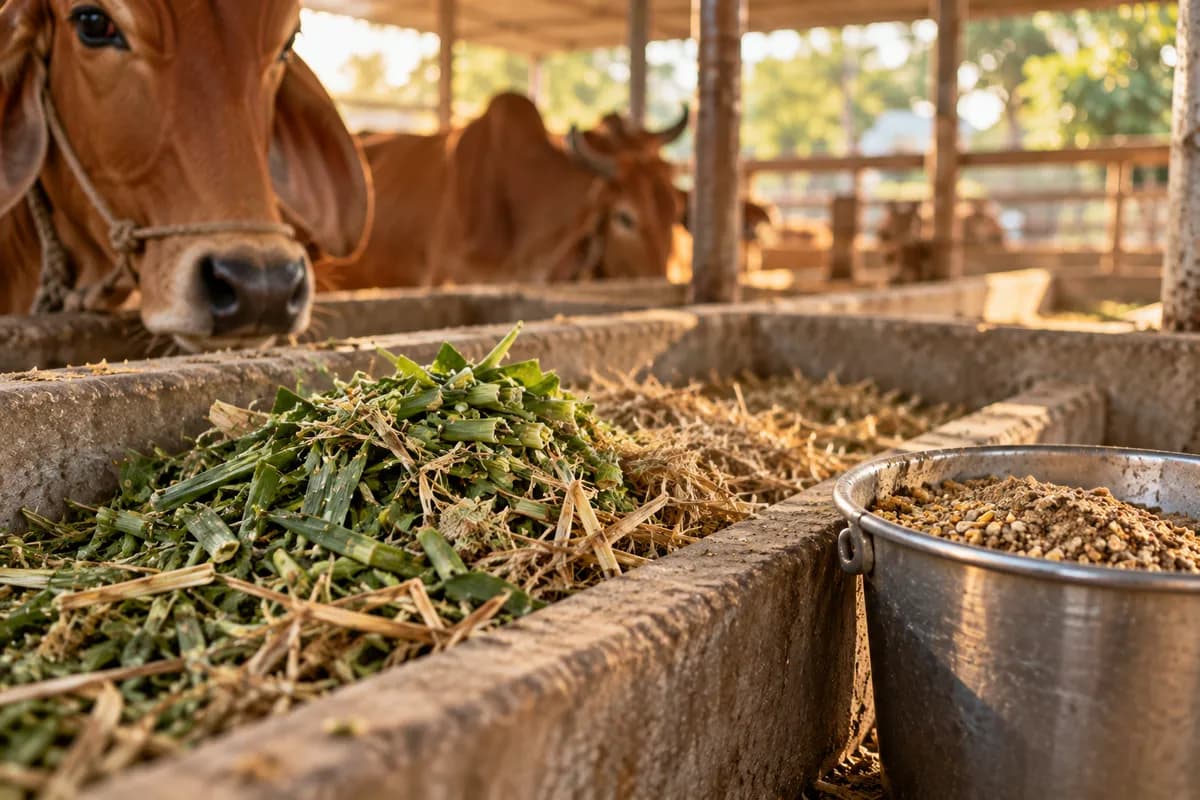
- Too little roughage compared with concentrate. The ratio matters more than either amount alone.
- Poor body condition. A thin cow has little reserve to draw on.
- Improper rumen function. The rumen is the first stomach, where fibre is fermented. When it is upset, milk fat falls.
The review gives a number to aim for: roughage of at least 1.4% of body weight, cut to about 1.5 inches so the cow keeps chewing and ruminating. For a 400 kg cow that is about 5.6 kg. Ask your milk union's nutritionist how to count green fodder against that figure.
Very young, fresh green grass is a risk too, because it is high in unsaturated fat. Feed it along with dry fodder, not alone.
The four causes of low SNF
SNF (solids-not-fat) is the protein, milk sugar and minerals in the milk. NDDB gives these causes of low SNF:
- Negative energy balance: the cow gives more energy in her milk than she eats. This is a risk for thin cows and for cows early in lactation.
- Too little protein and energy in the ration.
- Too little mineral mixture.
- Heat stress.
What to check in the shed this week
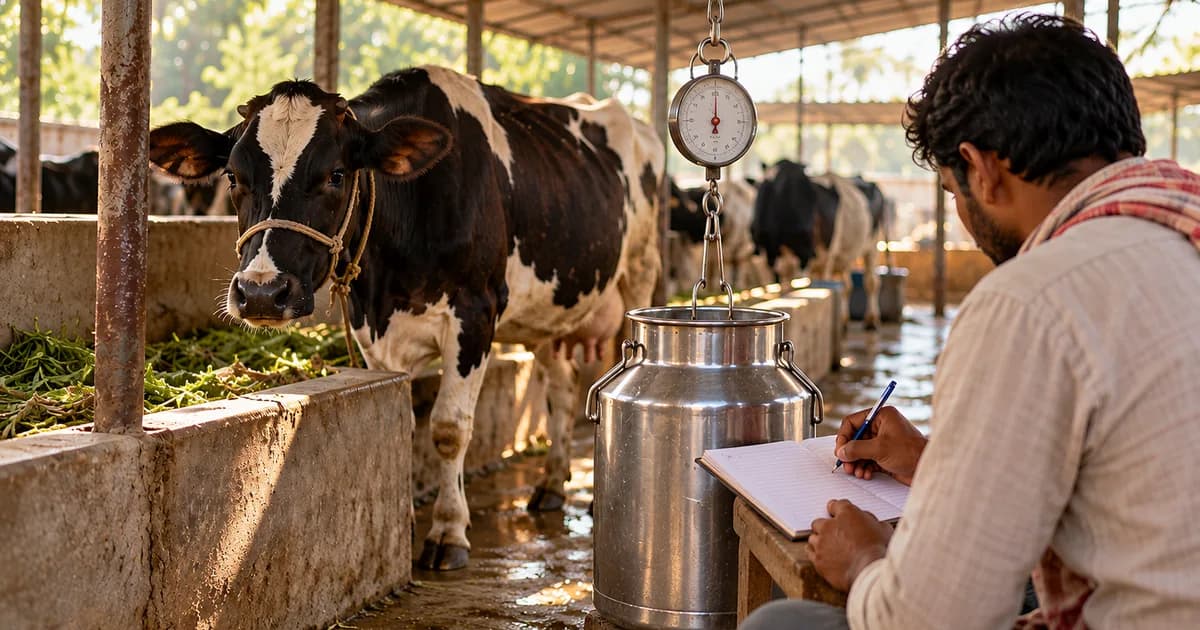
- Weigh the feed. For each milking cow, write down the kg of dry fodder, green fodder and concentrate she gets, for a week.
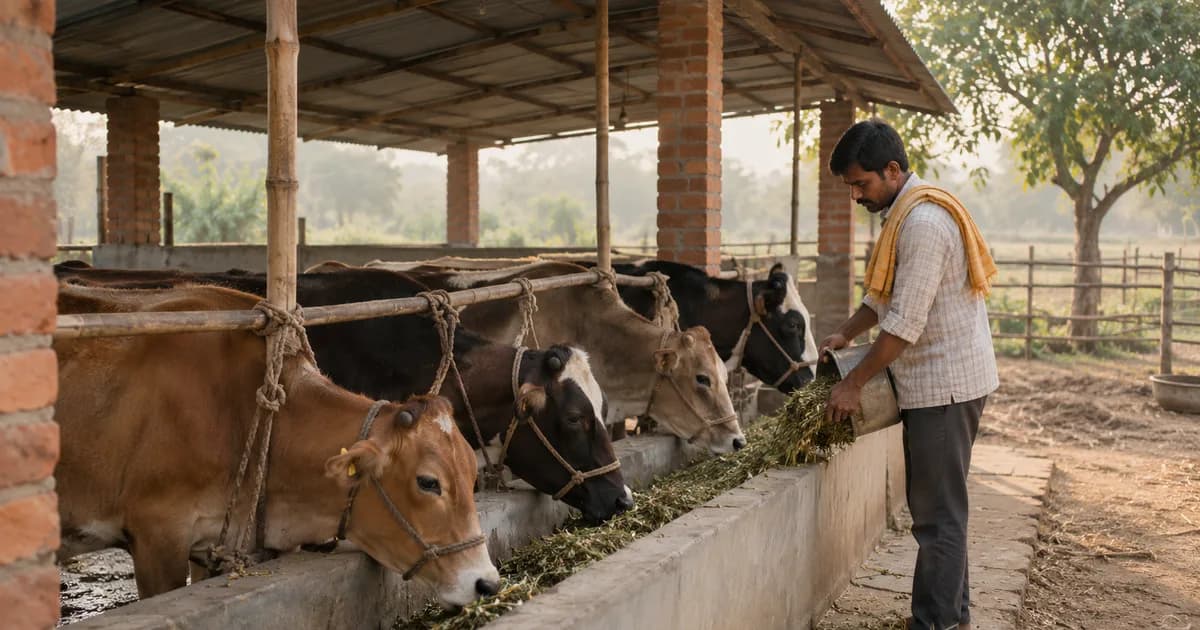
- Compare concentrate with fodder. If concentrate is high, move toward more fodder slowly, over one to two weeks, so the rumen can adjust.
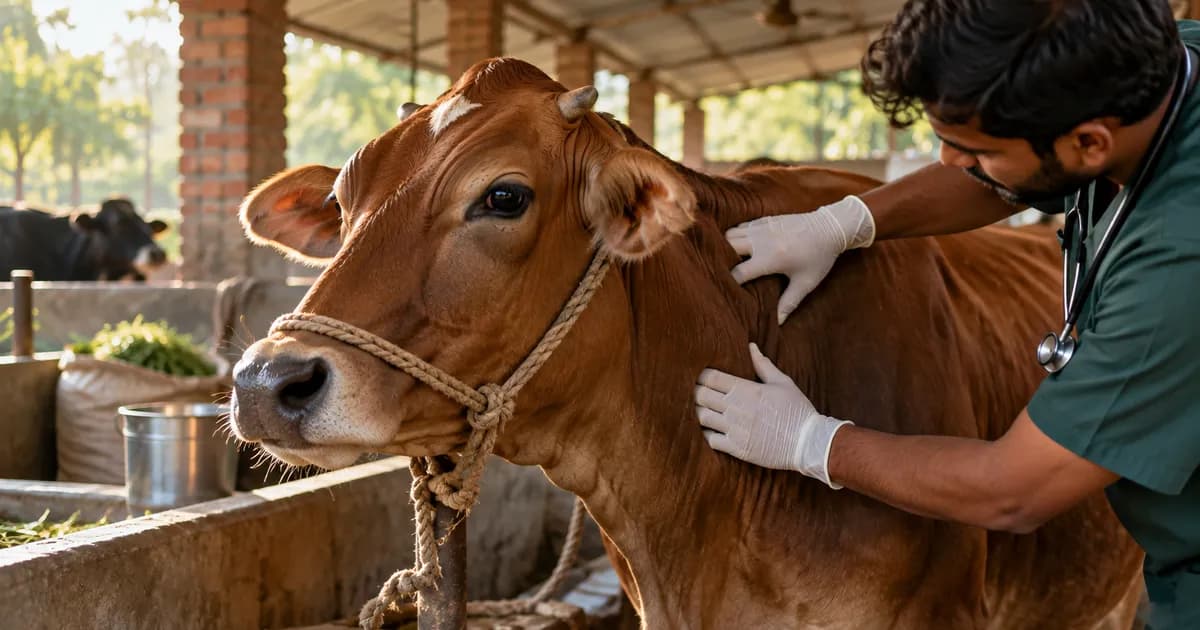
- Look at her condition. Can you clearly see her ribs and hip bones? A thin cow needs more energy, and the vet can tell you how much.
- Check the mineral mixture. Is it given every day, in the right amount? NDDB promotes area-specific mineral mixtures, so ask your milk union what is available for your district.
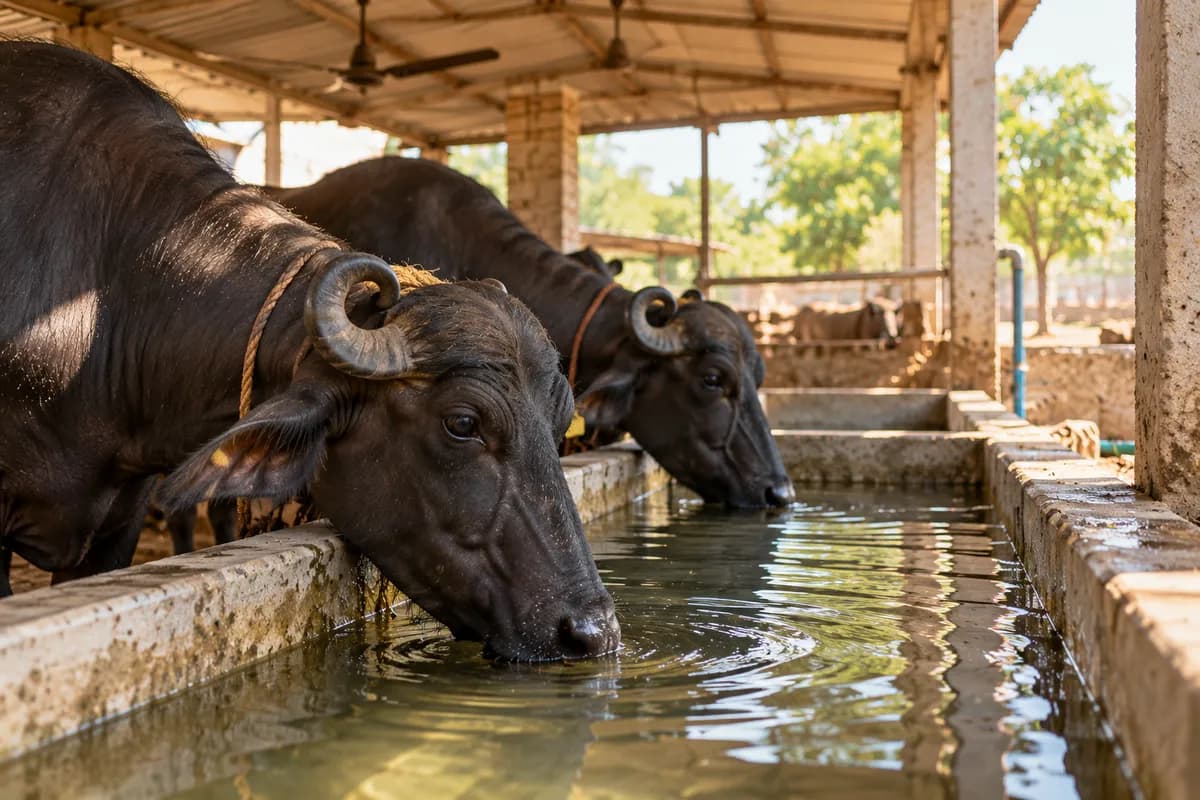
- Cut the heat. Give shade, airflow and clean, cool water all day. NDDB lists heat stress as a cause of low SNF.
- Watch each cow, not just the herd. A falling herd average hides which cows dropped.
Do supplements work?
NDDB's Samvriddhi supplement is made to raise fat and SNF. At 250 g per animal a day it reports gains of up to 8% in yield, 10% in fat and 6% in SNF. The page gives no trial details, such as how many animals or for how long, so read "up to" as a best case and ask your milk union for local results before you pay for it. A supplement helps most when the basics above are already right.
When it is not the feed
If one cow's milk changed suddenly, or you see clots, watery milk, a hot, hard quarter, or she is off feed, call the vet before changing the ration: illness and udder infection change milk as well. Low fat across the whole herd points to feed. Low fat in one cow points to that cow.
Keep a record so you can see what worked
A ration change takes a week or two to show. Pashupaalak keeps each cow's milk in kg and her feed next to it, so you can see whether yield moved after you changed the ration. Start free for 1 farm and 10 animals; no card needed.